


Columbia, North Carolina: So Much More Than a Stop Along the Way

Updated: Jun 23


With Ingrid Lemme-Chalut
Over the years, our family has made countless trips to Columbia, North Carolina. Located in Tyrrell County along the banks of the Scuppernong River, the town often surprises first-time visitors. Many know it only as a waypoint between Edenton and the Outer Banks. What they don’t realize is that Columbia has quietly evolved into one of eastern North Carolina’s most interesting small towns, where artists, boaters, conservationists, farmers, fishermen, and travelers all seem to cross paths along a picturesque waterfront.
The first thing that strikes visitors is the river itself. The Scuppernong River is not flashy. It does not roar through mountain gorges or crash against rocky shorelines. Instead, it glides quietly through the landscape, its dark waters reflecting cypress trees, blue skies, and passing clouds. Yet this peaceful river has shaped Columbia’s history for more than two centuries.

Founded in the late eighteenth century and designated the county seat in 1799, Columbia grew because of its access to the river and the Albemarle Sound beyond. Long before modern highways crossed northeastern North Carolina, boats carried people, timber, farm products, seafood, and supplies through these waterways. The river was Columbia’s lifeline, connecting the community to the outside world long before paved roads became commonplace.

One of the town’s greatest assets is its waterfront boardwalk and municipal docks. Visiting boaters can tie up directly along the boardwalk and walk a few steps into downtown. In many coastal communities, marinas sit separated from town life. In Columbia, the boats are part of downtown. Cruisers exploring the Albemarle Sound can dock, grab a coffee, browse shops, enjoy lunch, and be back aboard within minutes.


The waterfront is where visitors discover the slower rhythm that defines Columbia.
One of our favorite stops is Black Dirt Coffee Shop & Café. Located directly on the boardwalk overlooking the Scuppernong River, it has become a gathering place for both locals and visitors. We found ourselves returning repeatedly—not only for the excellent coffee but for the view. Sitting on the deck watching boats come and go while listening to conversations drift across the water captures the essence of Columbia better than any brochure ever could.

Although tourism has become increasingly important, Columbia remains very much a working town. The surrounding countryside continues to support farms that have sustained local families for generations. Agriculture remains an important part of the local economy, as does commercial fishing.
The nearby waters of the Albemarle Sound support a significant crabbing industry, and working boats remain a common sight. Here, tourism has not replaced traditional livelihoods. Instead, the old and the new comfortably coexist.

Historic buildings line Main Street, many carefully preserved and occupied by locally owned businesses.

The handsome courthouse stands as a reminder of Columbia’s long history, while landscaped public spaces, benches, brick walkways, pocket parks, and gathering areas make the town remarkably inviting. Unlike many small communities that struggle to maintain their downtowns, Columbia feels cozy, cared for, and alive.


One of our favorite discoveries was Inner Banks Mercantile. Much more than a simple gift shop, it offers an eclectic collection of home décor, apparel, gifts, local products, and coastal treasures. It is exactly the sort of place that encourages leisurely browsing. We stopped in for a quick look and stayed much longer, discovering items that reflected both the coastal culture and artistic spirit of the region.
Just down the street, another side of Columbia reveals itself. Pocosin Arts has transformed this small town into an unexpected destination for artists from across the country. What began as a local initiative has grown into a nationally recognized fine arts and craft school offering workshops, artist residencies, classes, and exhibitions.
Guests can browse galleries, meet artists, and experience a thriving creative community that would feel at home in a much larger city. The presence of Pocosin Arts
brought a creative energy to Columbia while helping preserve and celebrate traditional crafts that remain an important part of the region’s cultural heritage.

Another landmark reflecting Columbia’s commitment to preserving its heritage is the historic Columbia Theater. Originally opened in the 1930s as a movie house, the building today serves as a museum and cultural center that tells the story of Tyrrell County and the surrounding region. Exhibits explore local history, wildlife, Native American heritage, and the people who helped shape this corner of northeastern North Carolina.

But Columbia’s significance extends beyond the arts. The town also serves as the gateway to one of America’s most important wildlife conservation stories. Located right on Main Street, the Red Wolf Coalition educates visitors about the critically endangered red wolf.

Few people realize that the area surrounding Columbia is home to the world’s only wild population of red wolves. Once nearly extinct, these elusive animals now represent one of the most ambitious wildlife recovery efforts ever attempted in the United States.

Nearby, the Pocosin Lakes National Wildlife Refuge protects vast wetlands that support black bears, migratory birds, waterfowl, and countless other species. Birdwatchers, photographers, kayakers, and nature enthusiasts travel from around the country to experience these unique landscapes. During migration seasons, the skies often fill with waterfowl, creating a spectacle that draws wildlife enthusiasts year after year.
The refuge is part of a larger landscape that remains remarkably wild by East Coast standards. Dense forests, pocosins, marshes, rivers, and sounds create an environment that feels increasingly rare in today’s developed world. For travelers seeking nature rather than crowds, Columbia offers a refreshing alternative.


Community events also play an important role in Columbia’s identity. Throughout the year, residents gather for festivals, holiday celebrations, waterfront activities, art exhibitions, and seasonal events that bring visitors and locals together. Whether attending an art opening at Pocosin Arts, exploring downtown during a special event, or simply strolling the waterfront on a busy weekend, visitors quickly discover that Columbia’s greatest attraction may be its sense of community. Yet despite these attractions, Columbia never feels crowded. Instead, it feels authentic.
During our frequent visits to see family, we have stayed at two very different but equally memorable accommodations.

Our most recent stay was at the Blue Juniper Inn, a charming Inn-and-breakfast just steps from the river. The beautifully restored property offers comfortable accommodations, but it was the hospitality that left the greatest impression.
Each morning, a light breakfast was lovingly prepared by Ms. Dawn, a local lady whose warmth and friendliness immediately put guests at ease. Conversations flowed easily around the breakfast table as visitors exchanged travel stories over fresh coffee and homemade dishes.
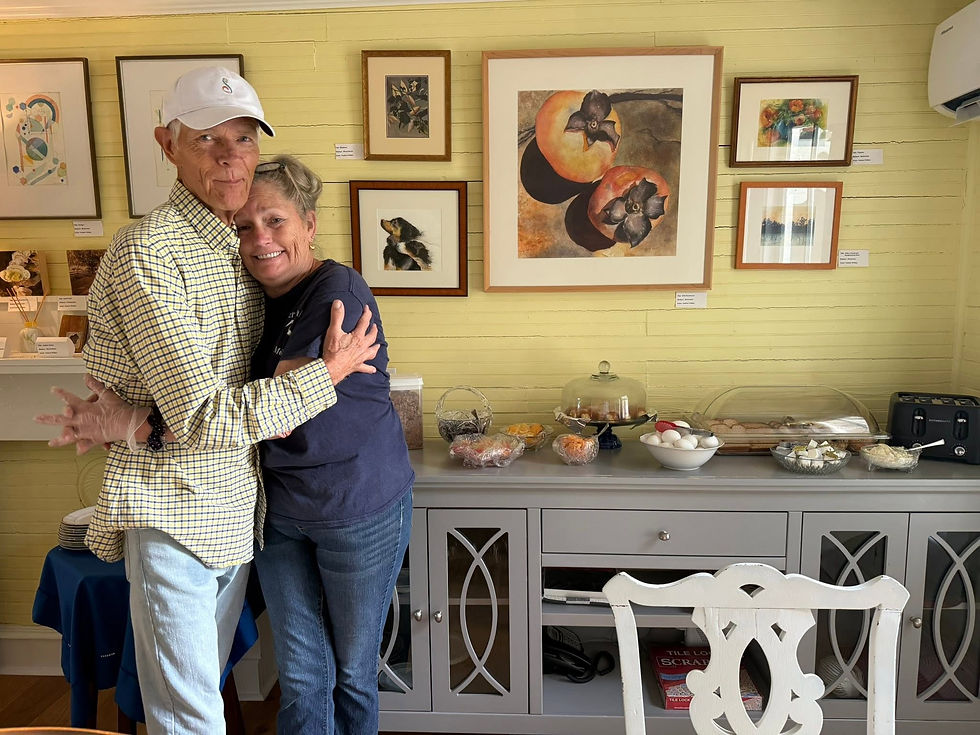

We have also enjoyed staying at Ms. Edith’s Apple of My Eye Airbnb close to the Albemarle Sound. The water-view property reflects Edith’s creative personality at every turn. An accomplished artist who works in a variety of mediums, Edith has filled the cozy studio barn with whimsical apple-themed décor, original artwork, antiques, and thoughtful details. The space feels less like a rental and more like a visit with a longtime friend. Sitting on the porch in a rocking chair while looking toward the Sound offers a peaceful reminder that life does not always need to move at full speed.
Columbia’s location adds yet another advantage.

Historic Edenton, one of North Carolina’s most charming waterfront towns, is only about thirty minutes away. The beaches and attractions of the Outer Banks can be reached in roughly forty-five minutes. Yet Columbia offers a quieter, more relaxed base from which to explore the region. As featured on my blog
Many visitors find themselves returning to Columbia after a day of sightseeing elsewhere. There is something comforting about ending the day beside the river, enjoying a waterfront stroll, chatting with locals, or simply watching the sunset reflect across the dark waters of the Scuppernong. Yet unlike some towns that lose their identity in the process, Columbia has managed to preserve what matters most.

The river still flows through town. Boats still dock along the waterfront. Farmers still work the surrounding fields. Crabbers still head out onto the Sound. Artists still arrive seeking inspiration. Conservationists still work to protect one of the world’s rarest canines. And visitors still discover that what appears at first glance to be a quiet stop along the highway is actually a destination worth exploring.

Yours in travel
Ingrid Lemme-Chalut
Travel Journalist & Publisher
Escape From Paradise www.EscapeFromParadise.net
The Montauk Sun www.montauksun.com
Facebook | Instagram | Twitter


Comments